The 3 types of cuts when pruning a tree – which is best?
Biologically speaking, there is a right way and wrong way to prune a tree. In this blog we will cover the 3 types of pruning and the effects they have on trees. Hopefully you will learn something either for your own use maintaining your trees, or if you employ a tree surgeon, you will have a more informed decision on what is best for the trees.
STUB CUTS
You may have seen some (usually unprofessional) tree surgeons or gardeners offering ‘tree topping and lopping’. This usually means the reduction of the whole or part of the tree without any regard to it’s recovery and future growth. Lopping and topping usually ends up with the first of our 3 types of pruning – the ‘Stub Cut’
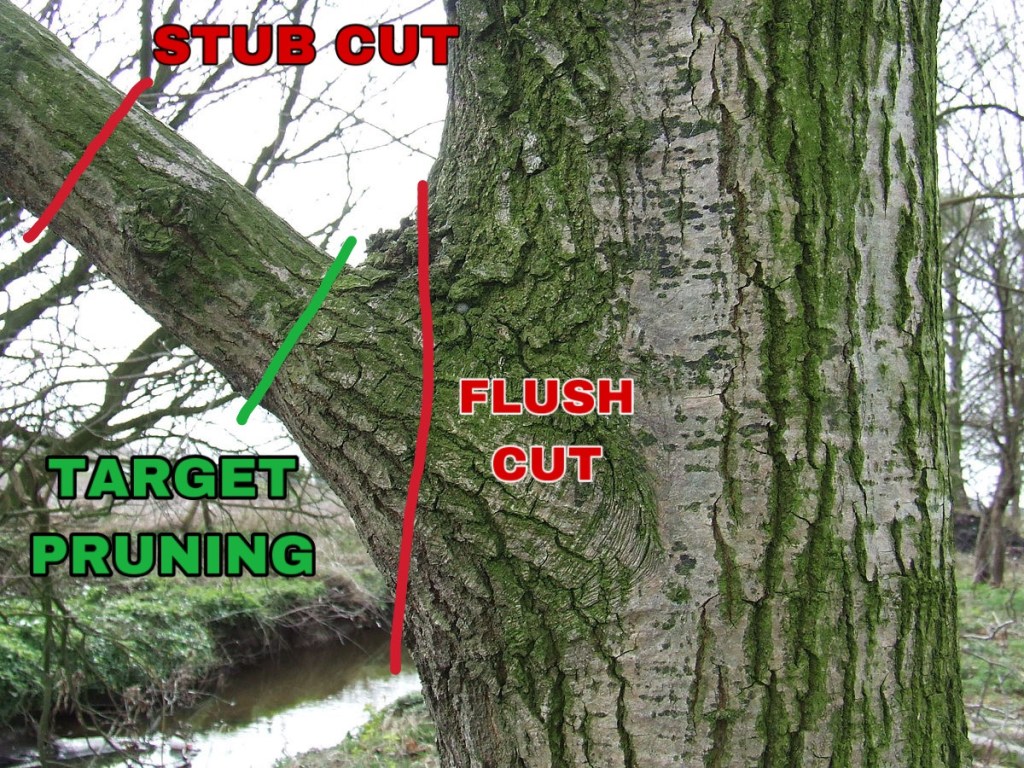
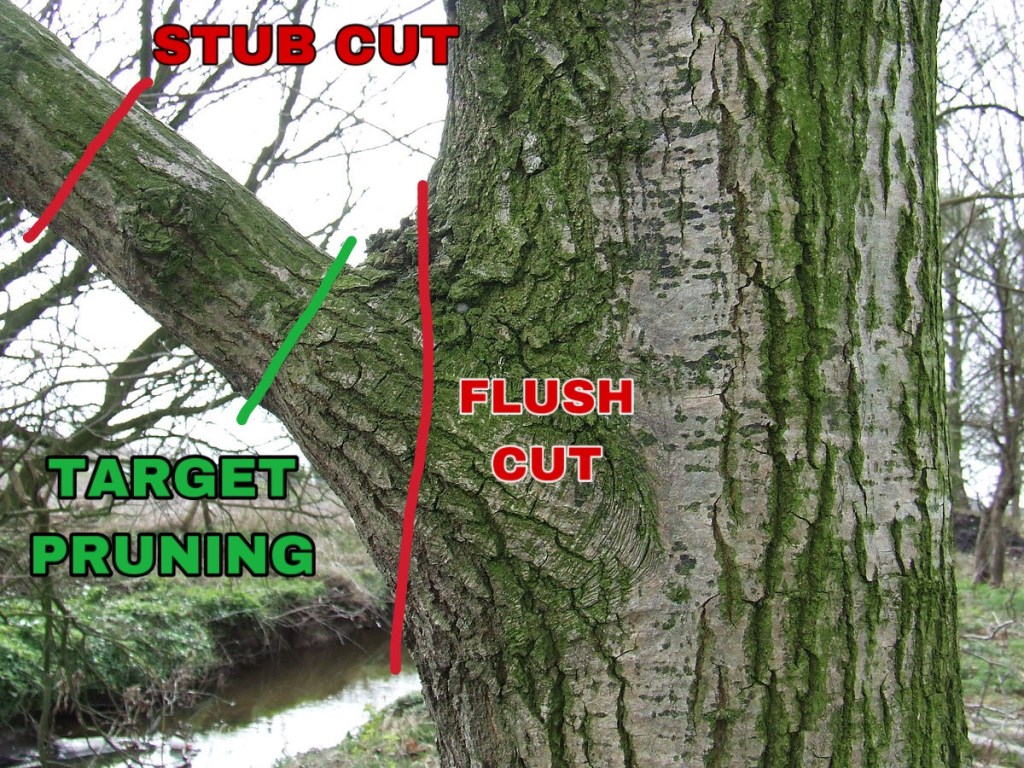
The Stub Cut is a cut made on the branch that is too far from the branch collar than it needs to be. A few problems can occur from this type of pruning. Firstly, the remaining stub could die, rot away and potentially be a hazard. Secondly, the dead stub could rot into the tree and also stop the tree from closing the wound at the branch collar. This can leave the tree susceptible to infections. Thirdly, on some trees, a stub cut can encourage a huge cluster of reaction growth at the end.
FLUSH CUTS
Flush cuts are when the branch is completely removed, including the branch collar. The branch collar is the bulbous area at the base of each branch that will close the wound if the branch dies or is snapped off. Removal of the branch collar will hinder the tree’s ability to close the wound and could lead to infection and rot.
TARGET PRUNING
Target pruning is considered best practice for pruning trees. To correctly prune a branch, a cut should be made just above the branch collar. This allows the tree to efficiently heal the wound, as the cut is as close to the collar as possible. This method is best for not only large branches that connect to the main trunk, but for smaller cuts made in the crown of the tree. Using this method will prevent the explosion of growth seen from stub cuts.
 Green Man Treeworks - Tree Surgery in Cornwall