Unfortunately, Ash Dieback has become more widespread across Cornwall. Every time I drive around the county, I recognise the tell tale signs of Ash trees in decline. Ash dieback will kill around 80% of ash trees across the UK. The effects will be staggering; it will change the landscape forever and threaten many species which rely on ash.
How to identify Ash Dieback
Ash dieback can affect ash trees of all ages. Younger trees succumb to the disease quicker but in general, all affected trees will have these symptoms:
- Leaves develop dark patches in the summer.
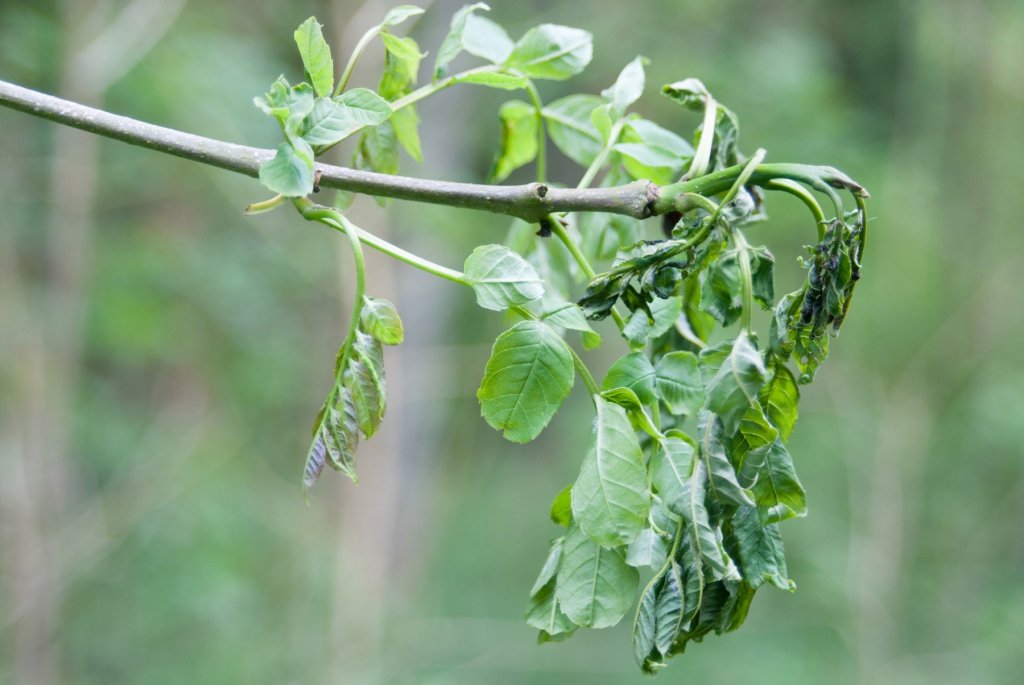
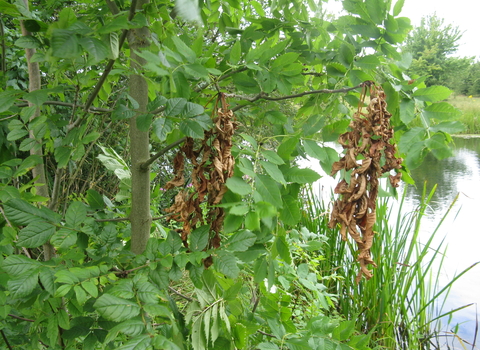
- They then wilt and discolour to black. Leaves might shed early.
- Dieback of the shoots and leaves is visible in the summer.
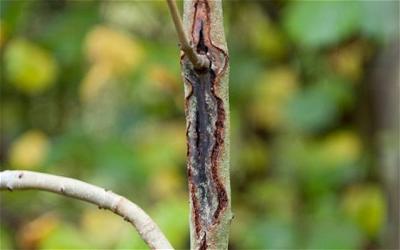
- Lesions develop where branches meet the trunk. These are often diamond-shaped and dark brown.
- Inner bark looks brownish-grey under the lesions.
- New growth from previously dormant buds further down the trunk. This is known as epicormic growth and is a common response to stress in trees.
Below is a gallery with different examples of Ash trees that have succumbed to the disease.

What is Ash Dieback?
Ash dieback is a fungus which originated in Asia. It doesn’t cause much damage on its native hosts of the Manchurian ash and the Chinese ash in its native range. However, its introduction to Europe about 30 years ago has devastated the European ash because our native ash species did not evolve with the fungus and this means it has no natural defence against it.
How does it affect the tree?
The fungus produces small white fruiting bodies between July and October which release spores into the surrounding atmosphere. These spores can blow dozens of miles away. They land on leaves, penetrating them until the fungus grows inside the tree, blocking its water transport systems, causing it to die.
What can the public do to help?
We are still in the early stages of understanding the disease, but some cautionary steps can be done to help reduce the spread.
- Clean your shoes before and after visiting a wood.
- Avoid taking cuttings or plant material from the countryside.
- Wash your car or bike wheels to remove mud or plant matter.
Our responsibilities as Arborists
There are no restrictions on the movement of Ash Dieback timber, branches or leaves, but where appropriate, material can be left on site to help stop the spread. When working on a site with infected trees, we will follow advice given to the public above.
The following is advice from the Arboricultural Association for tree contractors and customers
If affected trees are situated in high footfall areas this can create health and safety risks, but it doesn’t necessarily follow that all ash trees will need to be pruned or removed or that they will all die. Where circumstances allow, there is considerable merit in retaining ash trees, particularly where they show a genetic tolerance to the disease, which may be passed onto new generations of trees, or where they grow in open areas where they might escape the disease.
Finally, if you are concerned about your Ash tree, please contact us via the contact page and we will arrange a site visit.
 Green Man Treeworks - Tree Surgery in Cornwall